Building On Mountain Land Near Durango: What To Know
July 16, 2026
July 16, 2026
Thinking about building on mountain land near Durango? It is easy to picture the views, the privacy, and the home you want to create. But before you fall in love with a set of plans, it helps to know that building in the Durango area is often a step-by-step feasibility process shaped by access, utilities, site conditions, wildfire exposure, and jurisdiction. If you understand those pieces early, you can make a smarter land purchase and avoid costly surprises later. Let’s dive in.
One of the first things you need to confirm is whether a parcel is inside Durango city limits or in unincorporated La Plata County. That single detail changes the review path right away.
Within the City of Durango, planning and building review runs through the city process, and development proposals begin with a pre-application meeting. In unincorporated La Plata County, the county building division handles the permit path, and the county notes that a building permit does not replace other approvals that may also be required.
This matters because “near Durango” is not one simple permitting system. A parcel in the city, a parcel in the county, and a parcel affected by special districts or fire districts can each involve different steps, timelines, and agencies.
When you buy mountain land, you are not just buying acreage. You are buying the site’s ability to support the home you want to build.
That is why it is smart to treat a land purchase as a feasibility exercise first. Before getting attached to a house design, you will want to verify access, utility service, wastewater options, slope and drainage, soils, wildfire exposure, and the parcel’s governing jurisdiction.
In the Durango area, those details can shape both your budget and your timeline. A beautiful site may still require extra engineering, outside approvals, or design changes before construction can move forward.
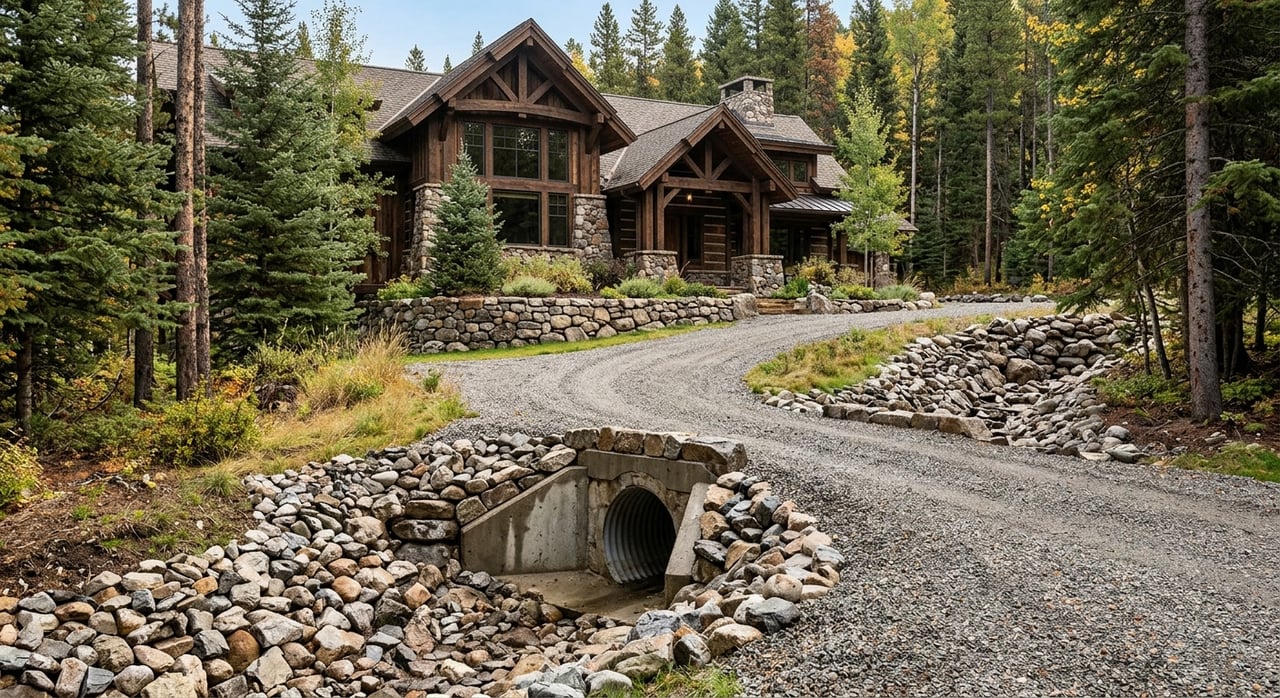
Access is one of the biggest early questions for mountain land. If the parcel is in unincorporated La Plata County, driveway permits are required for any driveway over 125 feet or any driveway that connects to a county road.
The county also notes that a driveway is not considered legal until the final inspection is complete. That means access is not just about whether you can physically reach the property. It is also about whether the driveway can be permitted and finalized through the proper process.
You should also confirm whether the road serving the parcel is county maintained. If access crosses another parcel or does not come directly from a public road, the county requires legal access documentation.
For mountain parcels, this is a major due-diligence item. A site with unclear access can affect design, timing, and long-term usability.
Many mountain parcels near Durango are not plug-and-play when it comes to utilities. Water and wastewater are often among the first questions to answer, not the last.
For habitable structures in La Plata County, approved sewage service is required. If the property will use a private septic system, the county requires a septic permit, and final inspection and a certificate of occupancy can be withheld until septic approval is complete.
If the parcel is served by a central or municipal system, written authorization from the utility agency is required before a building permit is issued. That makes utility confirmation an early-stage task that should happen before construction plans are too far along.
If the home will rely on a well, the Colorado Division of Water Resources handles well permitting. Complete applications for new or replacement wells may take up to 49 days, so water planning should begin early in your process.
Mountain land can be beautiful, but it can also be technically demanding. In La Plata County, the building packet identifies issues such as expansive soils, flood-hazard zones, snow load, wind, frost depth, and radon protection as important design considerations.
The county also notes that expansive soils may require a soils report or engineered foundation design. That can affect both what you build and what it costs to build it.
Steep terrain adds another layer. La Plata County’s hazard mitigation planning identifies landslides, rockfall, debris flows, mudflows, erosion, and flash flooding as real local hazards, especially in steep areas and along road cuts.
In practical terms, that means your dream building site may need more than a basic home plan. It may need site-specific design, drainage planning, and input from professionals who understand mountain construction.
Wildfire should be part of your decision from the beginning. It is not something to think about only after you close on land.
La Plata County’s wildfire preparedness guidance emphasizes home hardening, home ignition zones, and parcel-level hazard assessments. The City of Durango also states that it will begin enforcing the Colorado Wildfire Resiliency Code in 2026.
For buyers, the takeaway is simple. Wildfire exposure can influence where you build, how you build, and what site work may be needed around the home.
A parcel may still be a great long-term fit, but it is wise to evaluate wildfire conditions early so your budget, design, and expectations are grounded in reality.
Another common mistake is assuming that building on land means getting one permit and moving ahead. In the Durango area, the process is usually more layered than that.
For parcels inside Durango city limits, the published review process is sequential. It begins with a pre-application meeting, then moves through application and completeness review, staff and agency compliance review, and, when needed, commission or city council hearings.
In unincorporated La Plata County, plan review is typically listed at about 4 to 8 weeks or 6 to 8 weeks, depending on timing and the details of the application. The county also makes clear that a building permit does not replace separate approvals for grading, floodplain development, land use, or other required actions.
That means a custom build on mountain land is usually a multi-stage process. Access, septic, water service, site conditions, and development review can all affect the order of operations.
It is also important to understand what can hold up the finish line. In La Plata County, final inspection and the certificate of occupancy can be withheld until septic, driveway, and water-service approvals are complete.
That detail matters if you are trying to plan construction timing, lender requirements, or move-in expectations. Even if the house itself is nearing completion, unresolved site or utility approvals can still delay final sign-off.
This is one reason mountain builds benefit from patience and careful sequencing. The site and the approval path often shape the schedule just as much as the builder does.
Because Durango-area land can involve several moving parts, it helps to assemble the right professionals early. Depending on the parcel, development plans may be routed to outside agencies such as fire, electric, transportation, and utility providers.
That is a strong reminder that mountain land decisions often benefit from local builder, surveyor, civil engineer, septic designer, and well professional input early in the process. Getting those perspectives sooner can help you spot feasibility concerns before they become expensive problems.
If you are comparing land options, this is where experienced acreage guidance matters. Two parcels with similar views and price points can have very different building paths once access, utilities, and terrain are fully reviewed.
If you are serious about building near Durango, a little discipline up front can save a lot of frustration later. Before committing to a parcel, focus on the basics that affect whether the land fits your goals.
Here is a practical checklist to keep in mind:
Building on mountain land near Durango can absolutely be worth it. You may end up with a home that fits the land, supports the lifestyle you want, and serves your family for years to come.
The key is to stay realistic from the start. In this market, good outcomes usually come from patience, local knowledge, and a willingness to let the property’s conditions guide the project.
If you want help evaluating mountain land, acreage, or building potential in Colorado, Carol Games brings deep experience with land, ranch, and mountain properties and can help you approach the process with clarity and confidence.
Western Mountain Real Estate sells homes, homes in town, homes on acreage, mountain cabins/log/green/solar homes, historic or homesteads, secluded mountain getaways, vacation, retirement homes, equestrian or fishing properties, or any other home, ranches, land, acreage, commercial, business property or hunting property. Contact them today for additional information.