By Western Mountain Real Estate
Buyers ask us about Castle Rock all the time, and the question usually comes from the same place: they've driven through on I-25, spotted the castle-shaped butte rising above the town, and felt like they might be missing something. They're right. Castle Rock sits about 30 miles south of Denver and 40 miles north of Colorado Springs, and it has built an identity that doesn't borrow from either city. We work across this market regularly, and the more time you spend here, the more the appeal becomes concrete and specific rather than hard to articulate.
Key Takeaways
- Castle Rock has 136 miles of trails, 62 parks, and more than 6,900 acres of open space built into the town's fabric
- The historic downtown is walkable, locally owned, and a genuine neighborhood anchor
- Median home prices in Castle Rock have tracked significant long-term appreciation — from $308,000 in 2010 to over $690,000 by 2025
- The town sits between two major metros while maintaining its own distinct identity and character
The Rock Itself — and What It Represents
Castle Rock takes its name from the prominent rhyolite butte at the center of town — a geological formation that gives the skyline a silhouette unlike anything else along the Front Range. The rock is hikeable, and the trail to the top offers panoramic views of the surrounding valley and the distant Rocky Mountains.
That same rhyolite stone shaped the town's earliest economy. In the late 1800s, Castle Rock was a hub for quarrying operations that supplied building material to communities across Colorado — some of the buildings in Denver were constructed with stone pulled from this area. The historic architecture in downtown Castle Rock still shows that material in its original context, which gives the town a physical connection to its past that's rare in fast-growing Colorado communities.
The iconic star atop the butte, first lit in 1936, gets illuminated every November at the annual Starlighting Ceremony — a community tradition that draws residents together for live entertainment, a local marketplace, and the moment the star comes on for the season.
What the Rock and Its History Tell You About Castle Rock
- The castle-shaped butte is hikeable year-round with summit views of the Front Range
- Rhyolite quarrying gave the town its economic foundation and left visible marks in the downtown architecture
- The annual Starlighting Ceremony is one of the most attended community events in the region
- The town was incorporated in 1874 and has maintained a physical downtown core through significant growth
Trails, Open Space, and Outdoor Access
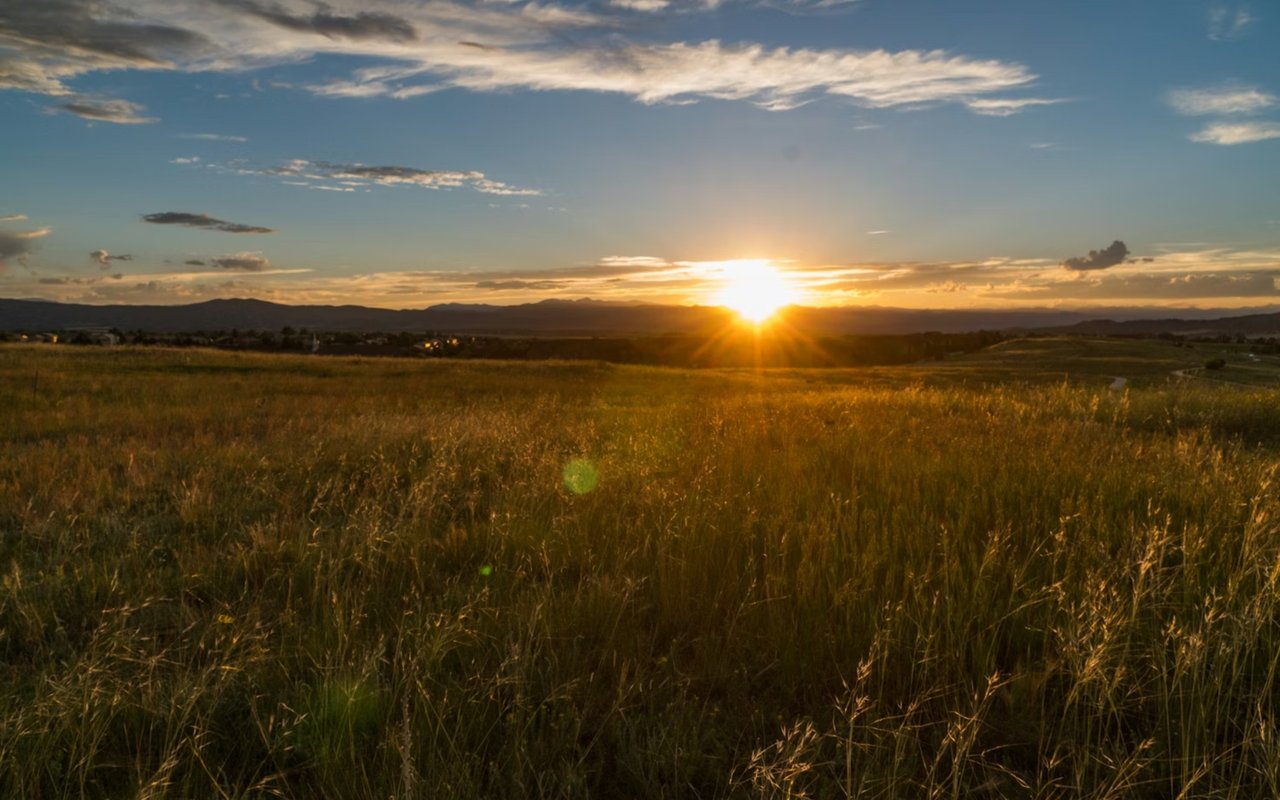
Castle Rock has put serious investment into its parks and trail network, and the numbers back that up. The town maintains 136 miles of trails, 62 developed parks, and over 6,900 acres of open space. That's not a figure that gets built accidentally — it reflects a long-term planning commitment to keeping outdoor access at the center of residential life.
Ridgeline Open Space runs along the western edge of town and offers elevated views of the valley below. Castlewood Canyon State Park, located just east of the town center, adds a full canyon environment with hiking, rock formations, and creek access. Philip S. Miller Park is the town's major regional amenity — 300 acres with trails, a zip line, an outdoor amphitheater, and a playground complex that draws residents of every age.
For buyers who want a home with quick trail access, this infrastructure shapes neighborhood values directly. Properties near the Ridgeline Open Space and in communities like The Meadows and Terrain are consistently sought after partly because of how close they sit to these systems.
Outdoor Highlights in Castle Rock
- Ridgeline Open Space — elevated ridge trail with views across the East Plum Creek Valley
- Castlewood Canyon State Park — canyon hiking, rock formations, and creek access just outside town
- Philip S. Miller Park — 300 acres with zip line, amphitheater, playgrounds, and trail connections
- 136 miles of trails — one of the highest trail-to-resident ratios of any town its size in Colorado
Downtown Castle Rock — Small Town, Real Character
The historic downtown is one of the most consistent reasons people give for choosing Castle Rock over comparable communities. The core along Wilcox Street is walkable, low-rise, and predominantly locally owned. You'll find independently run boutiques, galleries, specialty coffee, and restaurants that reflect the community rather than a franchise playbook.
Scileppi's at The Old Stone Church is the kind of anchor that every downtown wants. The building is a restored 1800s church, and the Italian menu — handmade pastas, chicken parmigiana, classic lasagna — draws people from across the metro area. Union offers a more contemporary American dining experience, and Crowfoot Valley Coffee is a local staple for everyday life.
The Outlets at Castle Rock, the largest open-air outlet center in Colorado with over 120 shops and restaurants, sits near the I-25 interchange and serves a regional retail draw. It adds commercial weight to the town without disrupting the character of the historic core.
Downtown and Dining Picks
- Scileppi's at The Old Stone Church — Italian classics in a restored 1800s church
- Union — modern American cuisine, contemporary feel
- Crowfoot Valley Coffee — locally owned daily staple
- Outlets at Castle Rock — 120+ shops and restaurants, the largest open-air outlet center in Colorado
The Real Estate Case for Castle Rock
Castle Rock's housing market has tracked impressive long-term appreciation. Median prices moved from approximately $308,000 in 2010 to over $690,000 by 2025 — a reflection of sustained demand from buyers relocating from both Denver and Colorado Springs, as well as households drawn directly to Douglas County.
The town's neighborhoods span a wide range of price points and lifestyle profiles. The Meadows is a master-planned community with over 1,100 acres of parks and 24 miles of internal trails, built around a family-oriented structure. Castle Pines Village offers gated luxury homes with golf course access on the northern edge of town. Bell Mountain Ranch and Terrain cater to buyers who want a bit more land and elbow room while staying within the Castle Rock municipal boundary.
What holds this market together long-term is the same thing that makes what makes Castle Rock, CO special as a place to live: the town is physically freestanding from the Denver metro sprawl, has its own robust service infrastructure, and continues to attract employers and residents who want proximity to two major cities without being absorbed by either one.
Castle Rock Neighborhoods Worth Knowing
- The Meadows — master-planned, 24 miles of internal trails, family-oriented
- Castle Pines Village — gated luxury, golf course views, northern Castle Rock
- Bell Mountain Ranch — larger lot sizes, open space feel, equestrian-friendly
- Terrain — newer construction, trail access, strong community amenities
FAQ
What is the population of Castle Rock, CO?
Castle Rock has grown to over 87,000 residents as of the most recent figures, with long-term projections pointing toward 130,000 to 150,000. Despite that growth trajectory, the town has maintained its downtown core and physical separation from the Denver metro area.
How far is Castle Rock from Denver and Colorado Springs?
Castle Rock sits approximately 30 miles south of Denver and 40 miles north of Colorado Springs, with direct access via I-25. Many residents commute to Denver's Tech Center while living in Castle Rock full-time.
Is Castle Rock a good place to buy a home?
Castle Rock has shown consistent long-term appreciation, a strong school district through Douglas County, extensive outdoor amenities, and a walkable historic downtown. For buyers looking for a community with its own identity between two major metros, it remains one of the stronger options along the Front Range.
Buy or Sell Castle Rock Real Estate With Western Mountain Real Estate
Castle Rock is one of the markets we know well, and the combination of outdoor access, historic character, and long-term appreciation makes it a compelling conversation for buyers and sellers alike. Western Mountain Real Estate works across the Colorado Springs area and the broader Front Range, bringing firsthand knowledge of the communities and the neighborhoods within them. Reach out to us to
learn more about our work in Castle Rock and let's start a conversation.